
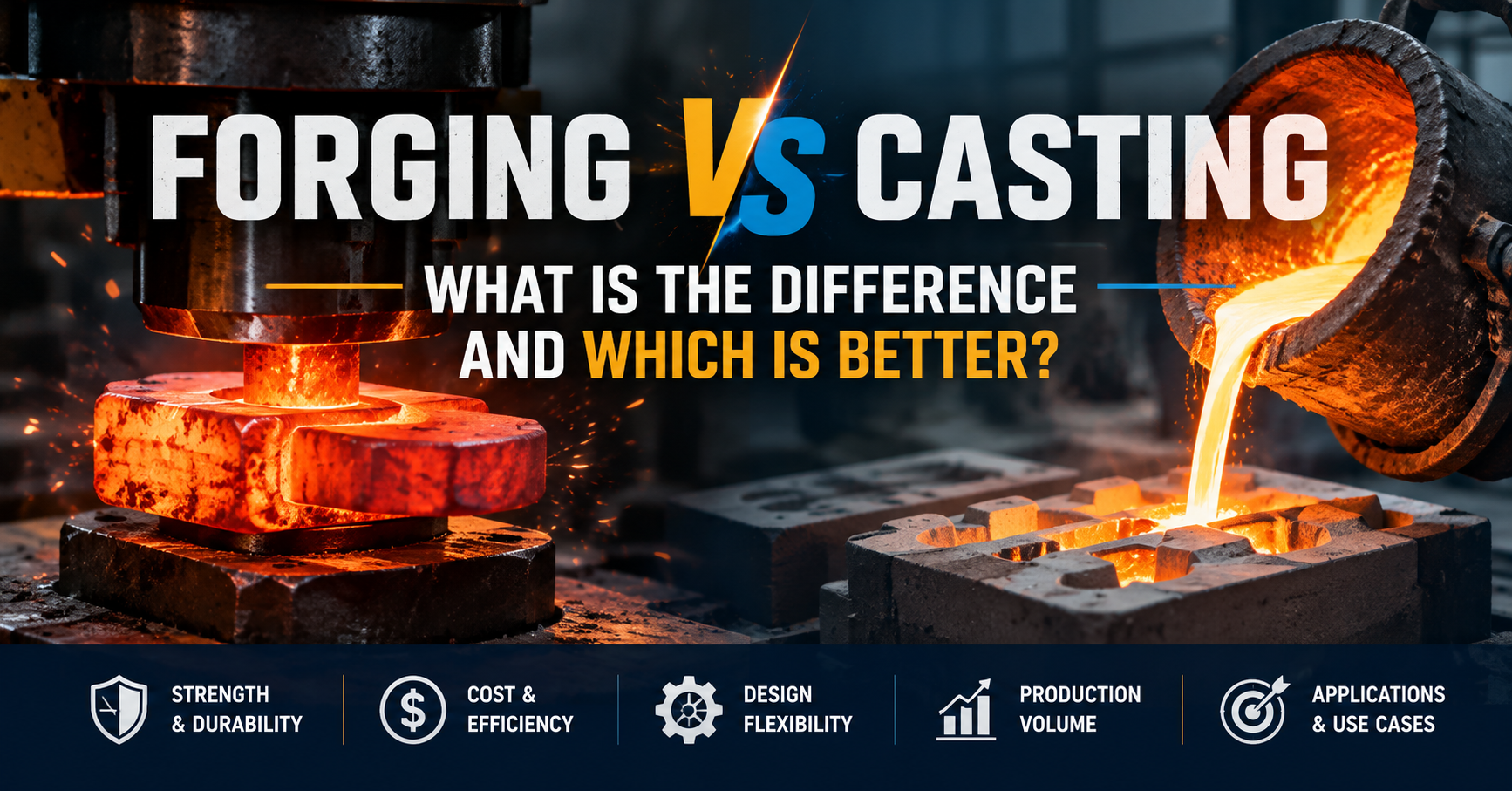
01 Aug Forging vs Casting: What Is the Difference and Which Is Better?
Forging and casting are two common ways to make metal parts. If you work in B2B purchasing, you may have seen both processes before. But if you are new to metal parts, it may not be easy to know the difference.
There is no simple answer that says one process is always better. Forging and casting are made in different ways. Each process has its own strengths and is suitable for different types of parts.
In this guide, we will explain the difference between forging and casting in simple terms. We will also compare their strengths, weaknesses, costs, and common uses. This can help B2B buyers choose the right process for their metal parts.
ABOUT FORGING
1. What Is Forging?
Forging is a metal forming process that uses pressure to shape solid metal.
Unlike casting, the metal is not fully melted during the main forming process. Instead, a metal billet is heated to the right temperature and then shaped by a press or hammer.
There are several types of forging, including hot forging, warm forging, cold forging, open-die forging, and closed-die forging.
During forging, the metal changes shape under pressure. The grain structure of the metal also changes and follows the general shape of the part. This can help improve strength and fatigue performance.
2. What Are the Advantages of Forging?
Higher Strength
During the forging process, the metal is pressed and shaped. This can improve the metal structure and create a better grain flow.
As a result, forged parts often have good strength and toughness.
Good for High-Stress Parts
Some metal parts such as connecting rods, shafts, gears, crankshafts, and some heavy equipment parts must handle heavy loads, impact, or repeated stress.
For these applications, strength and fatigue resistance are very important.
Forging is often a good choice for these parts because it can provide strong and reliable metal structure.
Good Material Structure
Forging works with solid metal and uses pressure to shape it. This normally gives the part a dense and strong structure.
Good for High Production Volumes
Die forging usually requires a special die.This means there is a tooling cost at the beginning of the project.
But when the order quantity is high, the tooling cost can be spread across many parts. The cost per part can then become more competitive.
For B2B buyers with regular production demand, this can make forging a good long-term manufacturing option. Cost depends strongly on volume, tooling, machining, and material use rather than on the forging process alone
3. What Are the disAdvantages of Forging?
Forging has many advantages, but it is not the best choice for every product.
Tooling Cost
For die forging, the manufacturer needs to design and make a special forging die. The die must handle high pressure and repeated use. This can make the initial tooling cost higher than some casting methods.
For very small orders, this cost may make forging less attractive.
LImitation of Part Shapes
Forging works very well for parts such as shafts, gears, rods, rings, discs, and connecting rods. But very complex shapes with deep cavities, internal channels, or very thin walls can be difficult or expensive to make by forging.
In these cases, casting may be a better option.
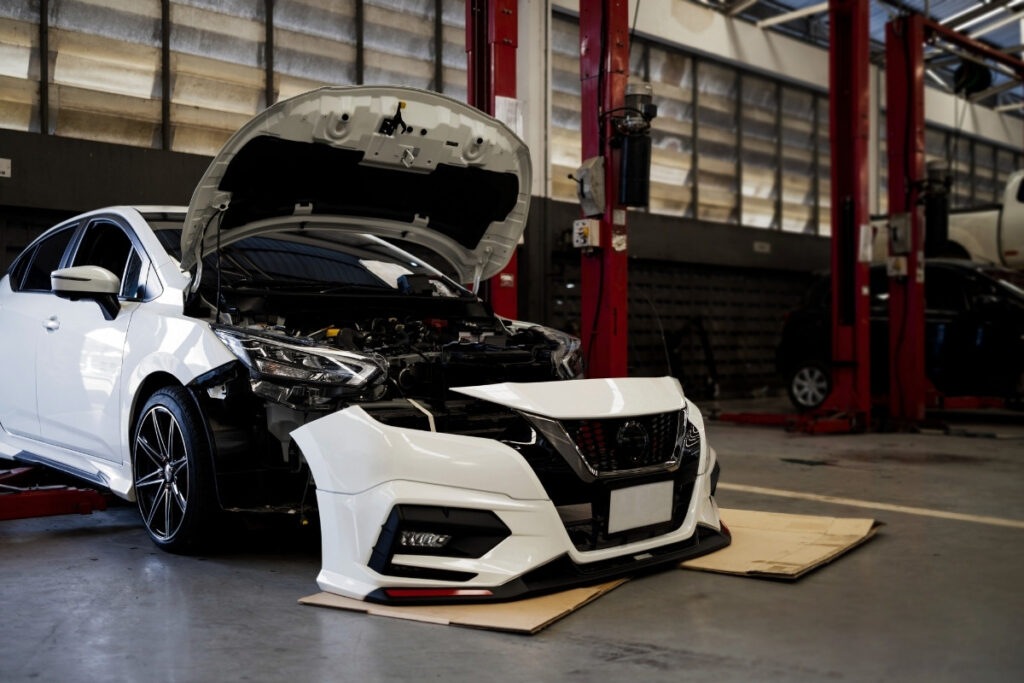
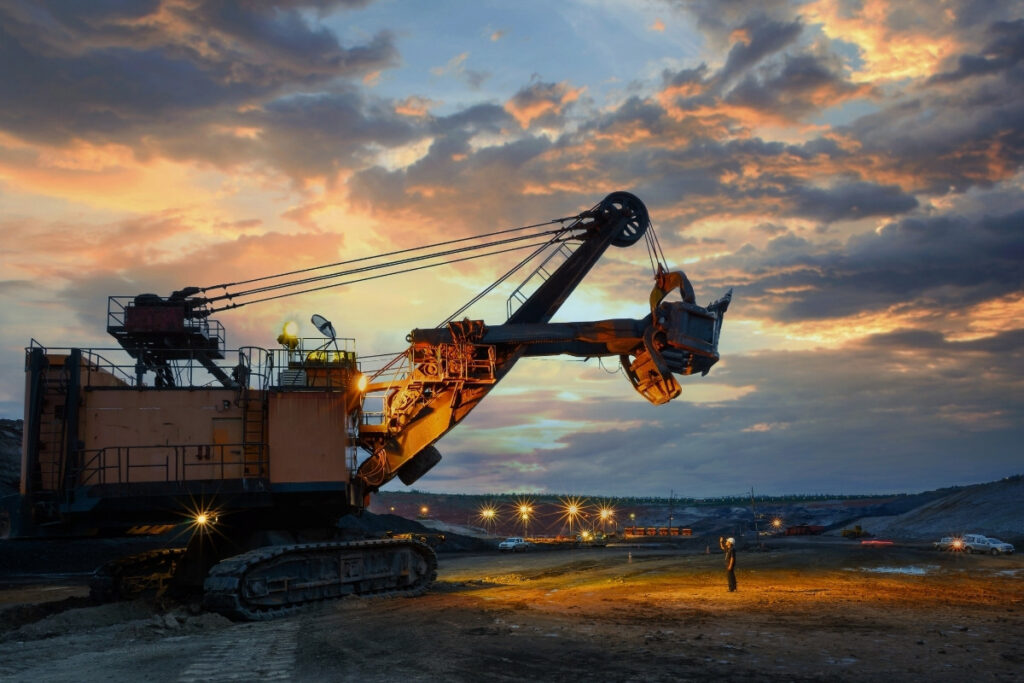
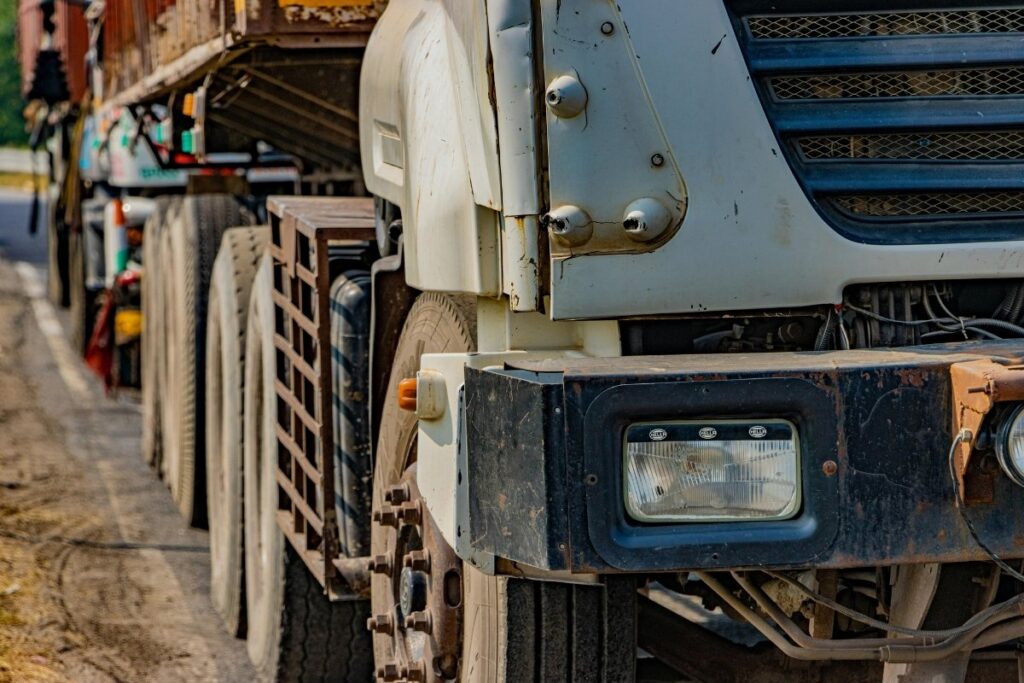
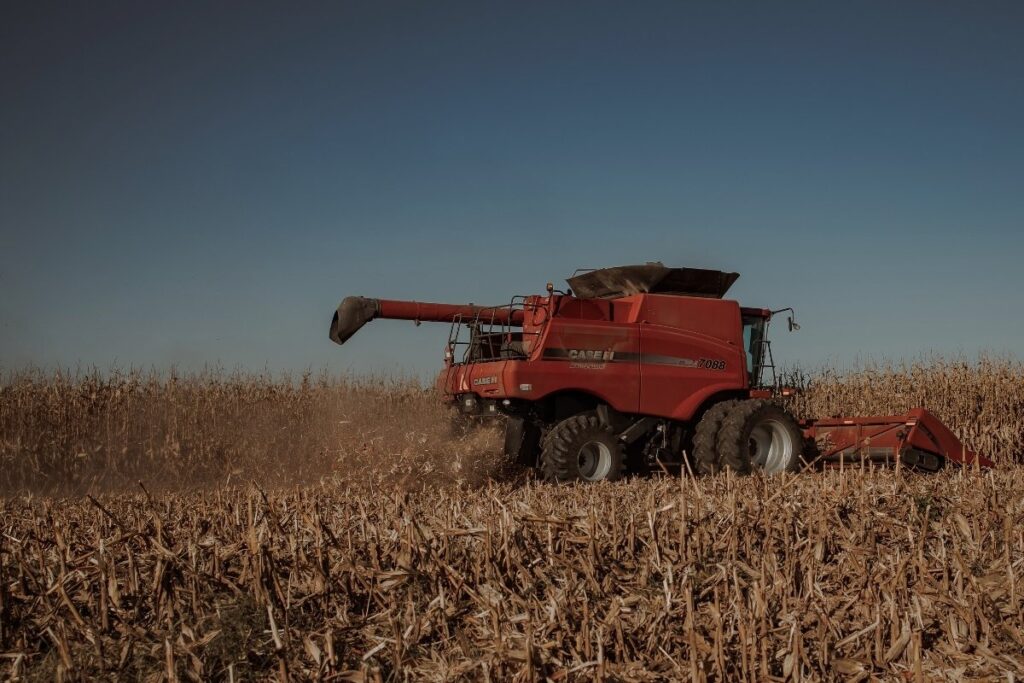
4. Common Applications of Forging
If a part needs high strength, good fatigue resistance, and long service life, forging is often worth considering.


ABOUT CastING
1. What Is Casting?
Casting is a manufacturing process that uses liquid metal to make a part.Common casting methods include:Sand casting,Die casting,Gravity casting,Investment casting and Low-pressure casting
First, the metal is heated until it melts. The liquid metal is then poured or injected into a mold. After the metal cools and becomes solid, the finished part is removed from the mold.
2. What Are the Advantages of Casting?
Better for Complex Shapes
One of the biggest advantages of casting is design flexibility.
Liquid metal can flow into complex areas of a mold. This makes it easier to produce shapes that are difficult to make by forging.
Casting can be used for parts with: Internal cavities,Internal channels, Thin walls, Complex curves and detailed shapes. This makes casting common for pump housings, valve bodies, motor housings, gearbox housings, and other complex parts.
Good for Large and Complex Parts
Some metal parts such as connecting rods, shafts, gears, crankshafts, and some heavy equipment parts must handle heavy loads, impact, or repeated stress.
For these applications, strength and fatigue resistance are very important.
Forging is often a good choice for these parts because it can provide strong and reliable metal structure.
More Flexible for Different Production Volumes
Casting includes many different processes.
For a small order, a manufacturer may use sand casting because the mold can be relatively simple.
For high-volume production, die casting can provide fast production and good repeatability.
This means casting can be used for different production needs, from prototypes and small batches to large-volume production.
Good for Integrated Parts
Instead of making several separate parts and joining them together, a manufacturer may be able to cast them as one piece. This can reduce the number of parts and reduce assembly work.
For some products, this can also help reduce the total manufacturing cost.
3. What Are the Disadvantages of Casting?
Internal Defects
Because casting uses liquid metal, the cooling process must be carefully controlled. If the process is not well controlled, defects such as pores, shrinkage, inclusions, and other casting defects may occur.
Modern casting methods can control these problems very well. However, for high-stress or fatigue-critical parts, buyers should pay close attention to material quality, process control, and inspection.
Strength And Fatigue Performance
Casting also does not always provide the same strength and fatigue performance as forging.
The final result depends on the material, casting method, heat treatment, part design, and quality control. Some cast parts also need additional work after casting. This may include cleaning, grinding, heat treatment, CNC machining, or surface treatment.
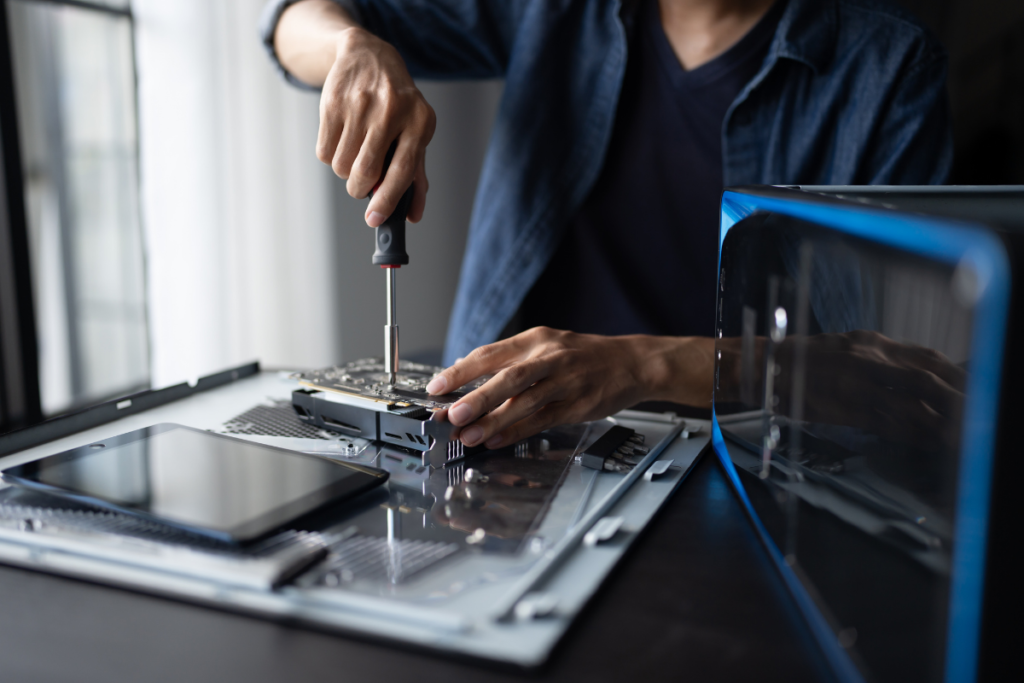
4. Common Applications of Casting
If a part needs a complex shape, internal space, or high design flexibility, casting is often a good choice
Forging vs Casting: Key Differences
The biggest difference between forging and casting is how the metal is formed.
- Forging shapes solid metal with pressure.
- Casting melts the metal and forms it inside a mold.
This difference affects strength, part design, cost, production volume, and many other factors.
Factor
Forging
Casting
Basic process
Solid metal is shaped with pressure
Liquid metal is cooled in a mold
Material structure
Dense structure and grain flow
Structure forms during cooling
Strength
Usually higher
Depends on material and process
Fatigue performance
Usually better
Depends on material and casting quality
Large parts
Open-die forging can work for some large parts
Sand casting is good for many large parts
Internal cavities
More difficult
Easier
Complex shapes
More limited
Excellent
Tooling cost
Usually higher for die forging
Depends on casting method
Small production runs
Die forging may be expensive
Some casting methods are more flexible
Large production runs
Good for mass production
Die casting is good for high volume
High-stress parts
Usually a better choice
Depends on the application
Complex parts
More limited
Usually a better choice
Typical products
Shafts, gears, rods, crankshafts
Housings, pump bodies, valve bodies
For B2B buyers, the most important thing is not to remember that “forging is better” or “casting is better.” Instead, look at what the part needs.
When comparing forging and casting, buyers should look at the part design, material, strength requirements, production volume, tooling cost, machining cost, quality requirements, and final application.
If both processes can meet the product requirements, it is a good idea to ask the manufacturer for a DFM (Design for Manufacturability) review.
Contact Nao GmbH to compare different options and help you understand the cost and production requirements before you place an order.
Sorry, the comment form is closed at this time.